
Reverse image search vs face search
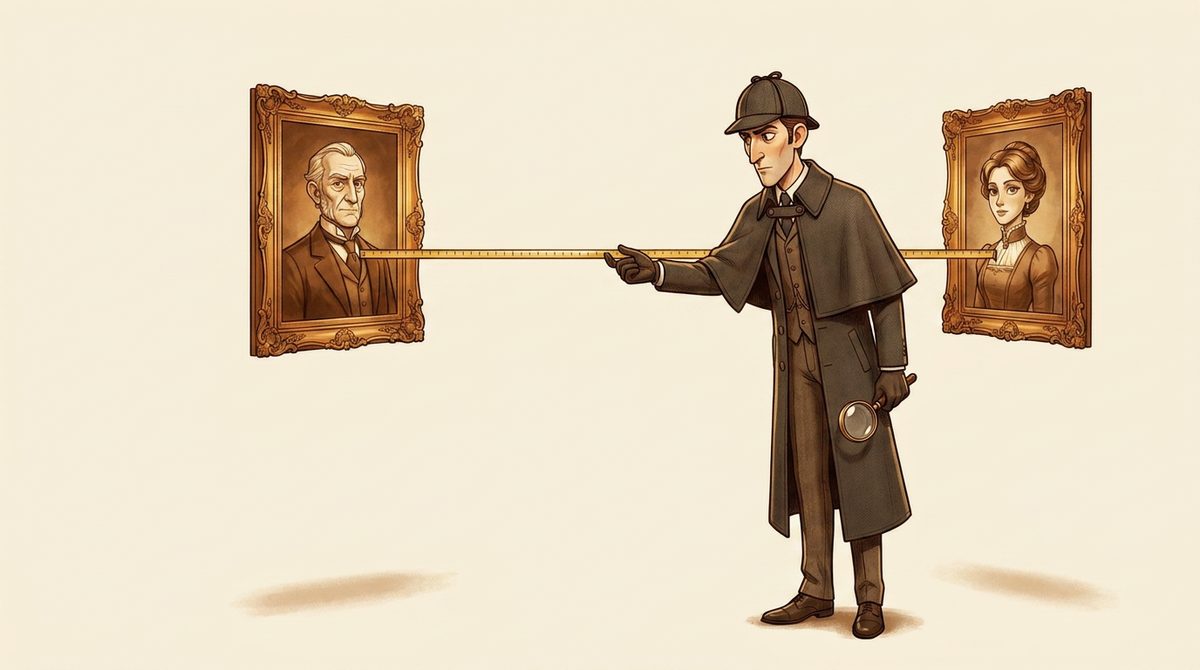
The two are treated as synonyms constantly, and they are not remotely the same thing. The confusion costs real time: people who needed one reach for the other and conclude, wrongly, that there is nothing on the internet.
Reverse image search compares files
Google Images, TinEye and the rest build a fingerprint from the pixels, colour distribution, edges, composition, and hunt for that fingerprint elsewhere. They are excellent at one job: finding where an image has been republished.
They are perfect for tracing a meme, catching someone who copied your product photo, or identifying a stock image. They fail at anything involving the same person in a different picture. Crop the image, apply a filter, save it at another size, or use a photo taken five seconds later, and the fingerprint changes enough that the match disappears.
Face search compares faces
A face search discards the file. It isolates the face, measures the proportions between landmark points, and compares those measurements. Background, clothing, lighting and framing stop mattering. Geometry is what counts, and geometry survives a filter, a crop and a decade.
| Same person, different photo | face search only |
| Same file republished | reverse image search |
| Cropped or filtered image | face search |
| Tracing a meme to its origin | reverse image search |
Why the empty result misleads people
An empty result on Google Images almost never means the photo is new to the world. It means that particular file has not been republished, which is exactly what you would expect of a selfie someone took and posted once. A lot of people read that emptiness as evidence and it is not.
One note on the engines
Google, Bing and Yandex index different parts of the web, and Yandex is notably stronger on faces and on content from Eastern Europe and Central Asia. If you insist on reverse image search, run all three before concluding anything. It takes two minutes.
The short version
If your question is "where else has this image appeared?", use reverse image search. If your question is "who else has this face?", no amount of reverse image search will answer it. Different tool, different problem.